CALIE Certified Educator Program
You’re already doing the work of a leader. You write the PD, coach the new hire, and build the program nobody else will touch. The title just hasn’t caught up yet. The CALIE Certified Educator Program helps it catch up: a credential with your name on it, a capstone project your leadership can see, and a cohort of people doing the same work you are.
Applications for the 2026-2027 cohort close October 14.

What the First Cohort Built
16 of 17
capstone projects were designed to influence learning beyond a single classroom, reaching schools, districts, county offices, and families.
11+
reusable toolkits, hubs, guides, and implementation systems built for real educational settings.
1,000
parents could be reached by one capstone’s scalable family digital literacy training model.
Voices from Inside the Program
Educators from the inaugural cohort and the CALIE team share what the program is and what it asks of you.
Who It’s For
You might not have leader in your title yet. But you are the one colleagues come to when something needs to change. If this sounds like you, keep reading:
- Instructional Coaches and TOSAs
- EdTech and Curriculum Coordinators
- Assessment & Accountability Leads
- Department Chairs and Grade-Level Leads
- IT leaders
- Aspiring site or district leaders
- Classroom Teachers seeking to enhance or advance a leadership role
If you’re ready to lead change from the classroom or beyond, this program is for you.

Everything Included
Here’s what your $2,000 investment actually gets you, piece by piece:
- 20 hours of personalized leadership coaching ($3,000 value)
- Spring Forward 2027 Conference registration ($500 value)
- 1-year CALIE membership ($50 value)
- 12 live, 90-minute cohort sessions with expert facilitators
- A finished Innovation Leadership Plan you can bring to your next interview
- Certified Educator swag
- Membership in the Certified Educator Exchange when you finish
Total value: more than $3,500. Your investment: $2,000.
Applying is free, and nothing is due when you apply. Your fee isn’t due until the program ends in April 2027. Pay in full, in installments, or have your district billed.
Featured Capstone 2026 Projects
This is the part that makes it real. Last year’s cohort walked away with finished projects solving actual problems in their own schools and districts. Here’s what that looked like.
Integrated Instruction Hub
A resource hub helping educators integrate technology into instruction across content areas with practical, ready-to-use strategies.
Lindsay Munoz
Computer Science Integration Teacher, Cucamonga School District
Empowering Underserved Communities through Family Digital Literacy
A collaborative train-the-trainer model bringing digital literacy skills to families in underserved communities through accessible, culturally responsive workshops.
Jose Ramirez, Coordinator II, Technology Learning & Support Services, EdTech & Innovation, LACOE
AI Integration in Science Instruction
A framework for integrating artificial intelligence tools into science classrooms to deepen student inquiry and support differentiated learning.
Rudy Escobar, STEM and Computer Science Coordinator, Stanislaus County Office of Ed, CS for CA Co-Chair
Foundational Math Mastery for Early Primary Grades
A structured approach to building number sense and mathematical reasoning in early elementary through targeted instructional strategies.
Charles J Wassif
Personalized Learning Teacher, Sage Oak Charter Schools
A Toolkit to Jump-Start UDL
A practical toolkit giving educators entry points into Universal Design for Learning with actionable steps for immediate classroom application.
Liz Ferry, M. Ed.
Director of Curriculum Development, YETI Academy
The “Gold Standard” Professional Learning Design
A framework for designing professional learning that moves beyond one-shot workshops to sustained, job-embedded experiences that change practice.
Alvaro Brito
Coordinator III, Los Angeles County Office of Education (LACOE)
Building a Culture of Active Learning and Inquiry
A guide for shifting classroom culture from passive instruction to active, inquiry-driven learning experiences across grade levels and subjects.
Ellen Palmer
Assistant Director, Technology Innovation and Outreach, Los Angeles County Office of Education (LACOE)
Finish With Something to Show
You leave with an Innovation Leadership Plan: a needs assessment, a clear vision, an implementation roadmap, and the metrics to measure progress. Then you present it. Certified Educators walk into their next cabinet meeting, board presentation, or interview with a finished plan and the experience of having defended it. Your leadership sees what you are capable of before the opportunity opens up.
What Our Certified Educators Say

“I never thought of myself as a “Leader” in my position, I am much more comfortable in a support role, helping the leader be successful. But I learned that advocating for something that you feel strongly about is also critical “leadership”.
– Joe Johnson, Technology and IT Services, Mountain View Los Altos Union High School District

“Participating each week pushed me beyond my comfort zone. The experience challenged me to think more deeply, generate new ideas, and turn those ideas into something concrete for my project based on what I learned throughout the course.”
– Rudy Escobar, STEM and Computer Science Coordinator, Stanislaus County Office of Ed, CS for CA Co-Chair

“This program provides the frameworks, expert insights, and peer support to move from addressing challenges with surface-level solutions to instead driving systemic change. No matter what role you play in education, you’ll have space to build sustainable solutions rooted in equity and built for lasting impact.”
-Lindsay Munoz, Computer Science Integration Teacher, Cucamonga School District
Meet Our Inaugural Cohort
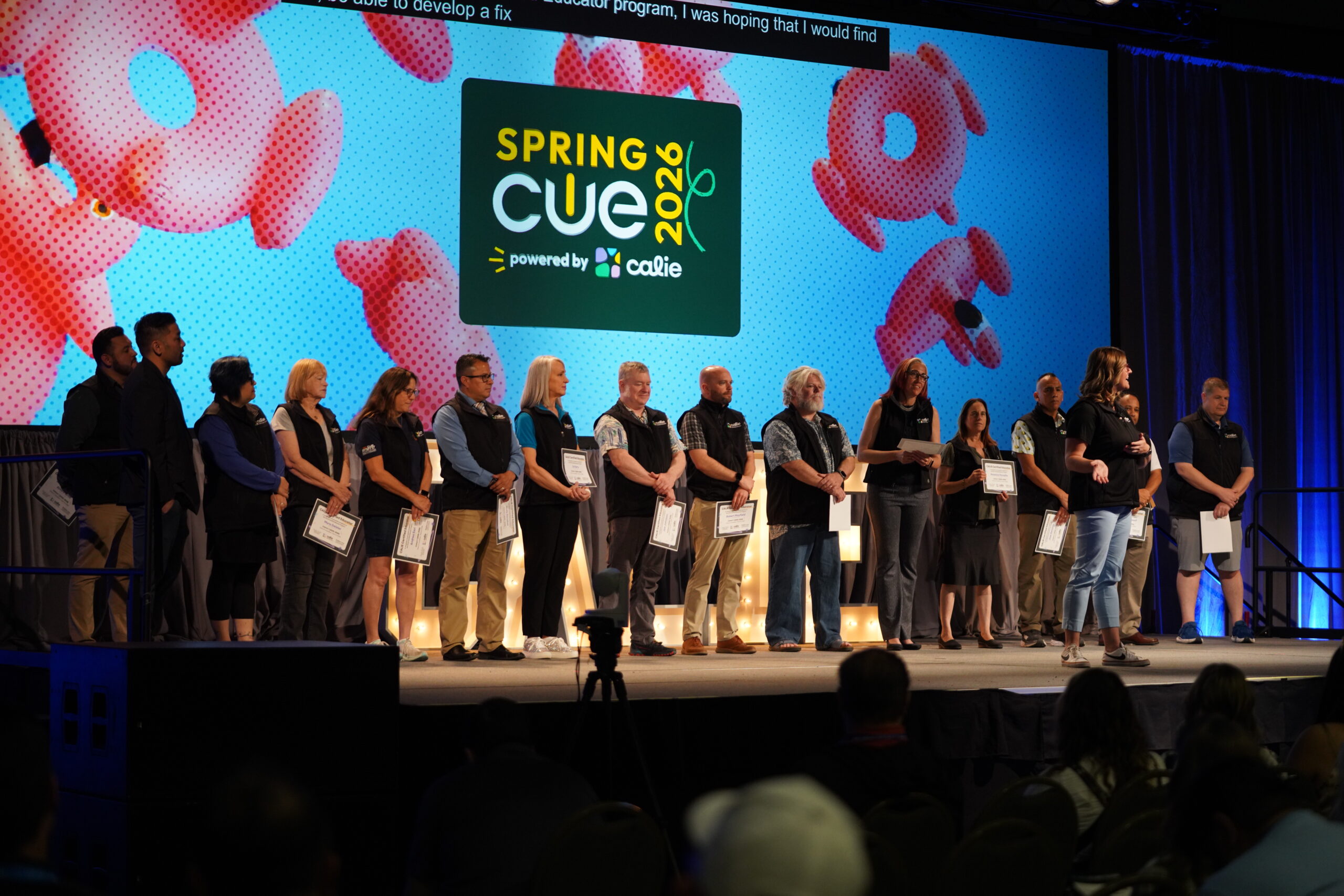
In 2025-2026, 17 educators from across California became the first to earn the CALIE Certified Educator credential. They came from classrooms, coaching roles, and district offices. They built capstone projects that tackled real problems in their communities. Their work set the standard for what this program can produce.
Inaugural Cohort Members
Robert Mayfield • Liz Ferry • Jason Williams • Lindsay Munoz • Alvaro Brito • Frank Parker • Laura Wilson • Jose Ramirez • Susie Oh • Joe Johnson • Rudy Escobar • Charles Wassif • Lisa DeLapo • Roxanne Pompilio • Myra Deister • Andrea Earl • Ellen Palmer
For Districts
Sending a team member? Certified Educators apply their capstone directly to a priority in your district, get outside coaching all year, and come back ready to present a real plan to your cabinet. One first-cohort participant identified an estimated $11,100 in annual support costs and designed a district process to prevent those costs before technology is purchased.
We accept purchase orders: select Bill Me at checkout, and an invoice is automatically created for your district. The Justification Toolkit has everything your business office needs.
2026-2027 Cohort
- Applications: Open through October 14, 2026
- Program timeline: October 14, 2026 – April 14, 2027
- Meeting cadence: 90-minute live, virtual meetings every other week, with additional asynchronous work. Planned 8-week break between November 18 and January 12.
- Optional: Advanced Certificate in Leading Innovation in Education and 8.0 graduate-level extension credits (additional cost paid to the university).
Share the value of this program with your admin team:

Frequently Asked Questions
Do I need to already be in a leadership role?
No. The program is designed for both aspiring and current leaders, including classroom educators who lead, coach, or mentor without a formal title.
Is the program appropriate for current administrators, coaches, or coordinators?
Yes. Participants at different career stages can apply the frameworks to their current roles and challenges and refine their leadership practice.
Can I complete the program while teaching full-time?
The program is designed for working educators. Plan for approximately 2–3 hours per active week in addition to the live session or recording, with additional time potentially needed during capstone development.
What does asynchronous work involve?
Activities may include readings or short videos, discussion reflections, practical assignments, and incremental capstone development. Work is self-paced during the week.
Which standards is the program aligned to?
The program is aligned to the 2024 California Standards for the Teaching Profession (CSTP), the California Professional Standards for Education Leaders (CPSEL), and the ISTE Standards for Educators and Education Leaders. See Standards Alignment above.
How is my capstone reviewed?
Two trained volunteer reviewers from the CALIE Certified Educator Committee and program graduates score each capstone using the Capstone Rubric. A score of 22 or higher out of 32 is required for certification.
What is the program cost, and are payment plans available?
The listed program cost is $2,000. Monthly payment options are available at checkout. District sponsorship documentation and invoice options may be available upon request.
Can my district pay for the program?
Yes. CALIE can provide a justification letter, professional-learning budget documentation, and invoice options for district payment.
Is the program tax-deductible?
Professional development expenses may be tax-deductible. Consult a tax advisor about your circumstances.
Is the certification a state teaching credential?
No. It is a professional credential, not a state teaching credential. It documents leadership development and participation in a professional community.
Do I have to present at Spring Forward?
No. Every participant presents their capstone to cohort peers at the Session 12 Showcase and schedules a presentation in their own context, such as a board or staff meeting. Presenting at Spring Forward 2027 (March 18–20, Palm Springs) is optional. Participants who choose to present there share their experience in the Certified Educator Program rather than their capstone project.